

Standardize tokens across a codebase
Replace hardcoded colors, spacing, radii, and typography values with an exported token system.
Bezel for Design Engineers
Bezel gives design engineers a shared system for semantic tokens, component previews, exportable artifacts, and AI-readable guidelines, so design decisions keep their meaning from concept to production.
Design Tokens
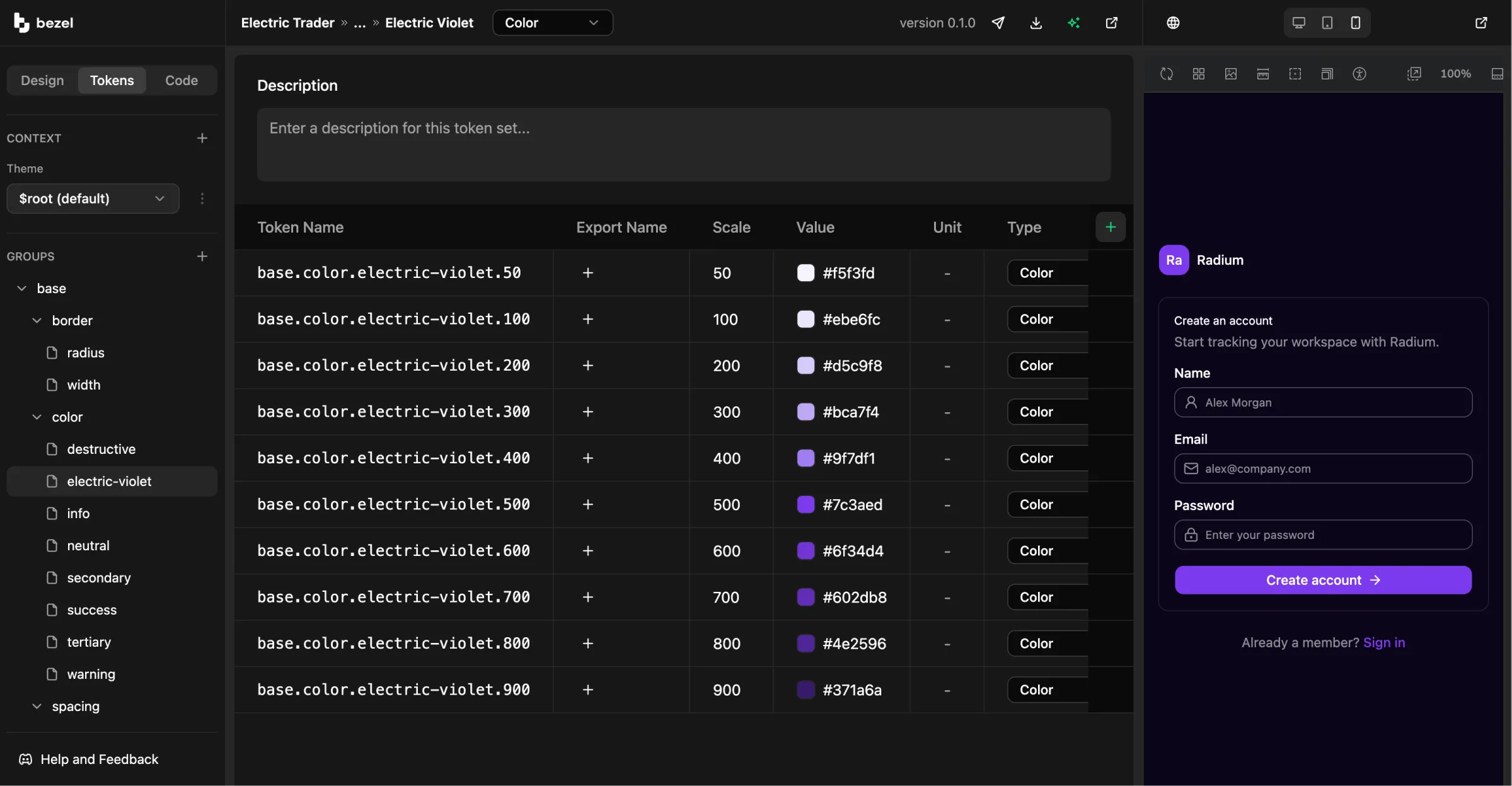
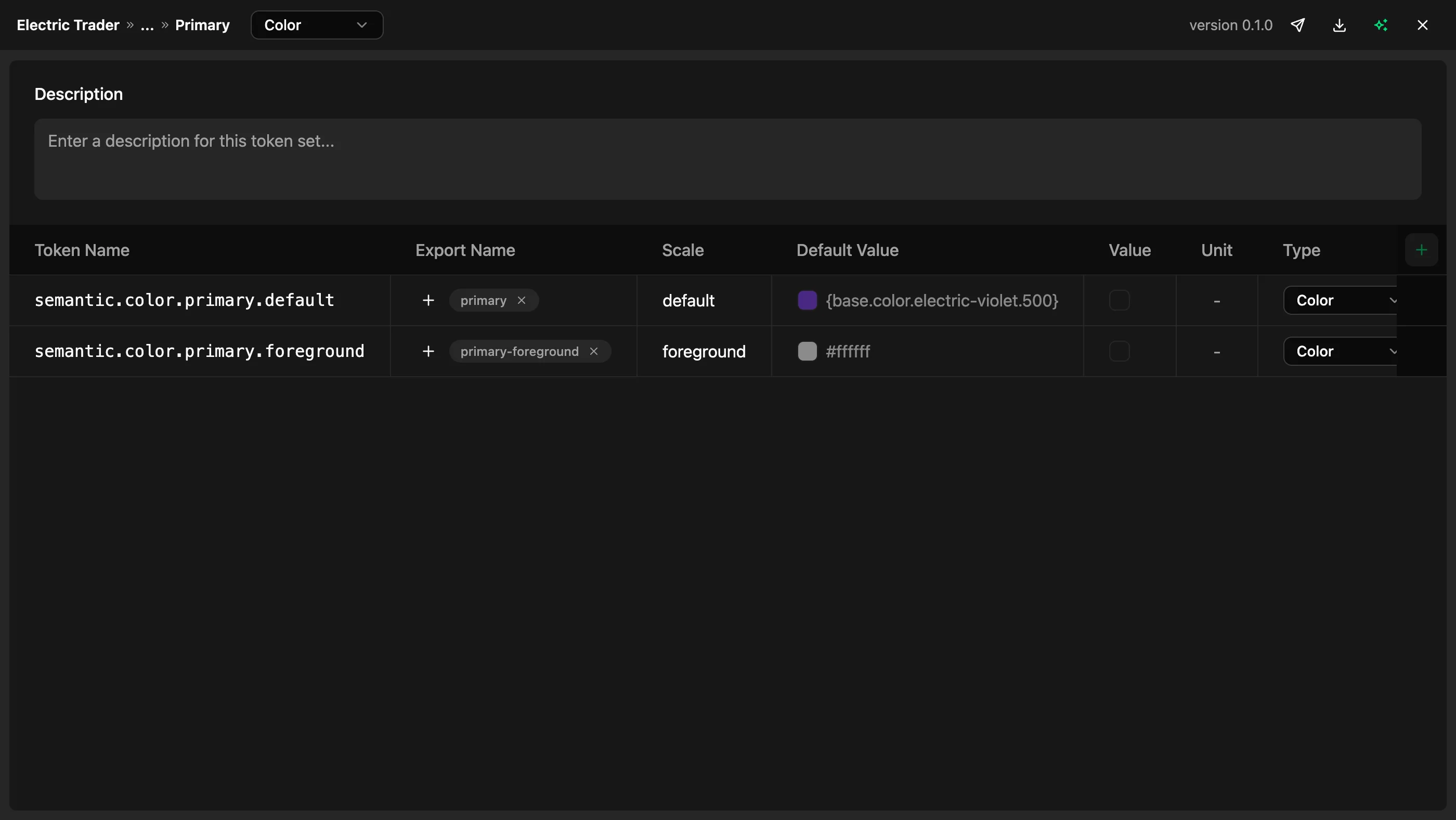
Base tokens, semantic tokens, aliases, export names, token types, and references are first-class parts of the model. Change a base value and every dependent semantic token follows.
Tokens export in the W3C Design Tokens format, giving your build pipeline a standard source instead of a hand-maintained spreadsheet or copied values from a design file.
Live Previews
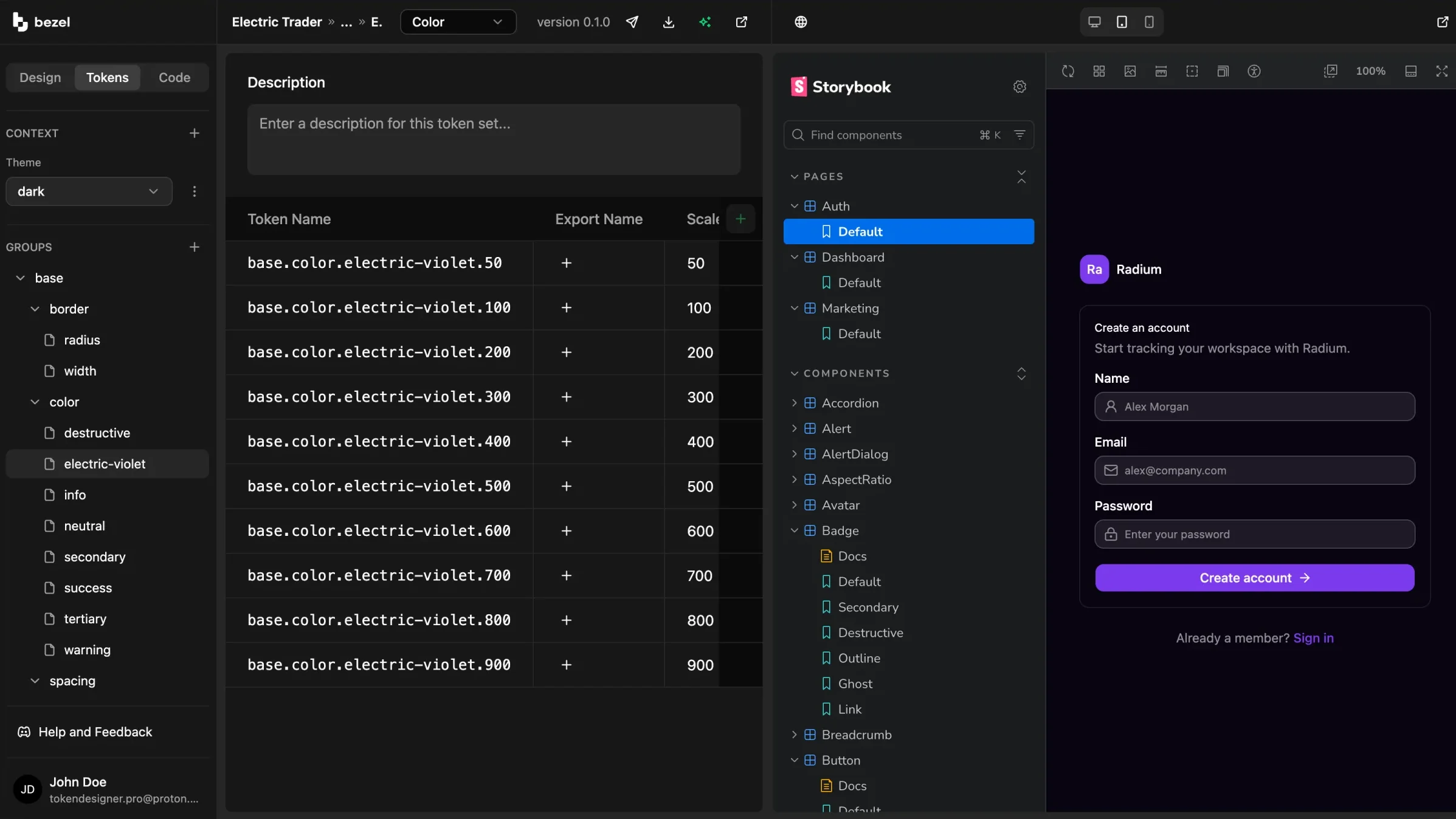
Point Bezel at your own Storybook or running app and token edits render on your components in your framework. Designers and engineers can see the impact before a pull request exists.
Because the preview is your code running, design system decisions are reviewed against the same surfaces that will reach production.
Bezel MCP
Connect compatible coding agents through MCP and they can query design tokens, guidelines, project context, and component-level recommendations instead of inventing values.
Design engineers define the rules once. Human developers and AI agents both work from the same source of truth.
❯ claude› Which of our semantic colors change in dark mode? Use the Bezel MCP, don't guess.⏺ bezel - get-project-contexts (MCP) ⎿ {"projectName":"Bezel Marketing","contextGroups":[{"groupName":"theme","supportedValues":["$root","light","dark"],"defaultContext":"$root","description":"Context group \"theme\" with 3 values. The \"$root\" context is always the default/base value."}],"usage":"Pass a context value (e.g., \"$root\", \"dark\", \"light\") as the contextKey parameter when using query-tokens, get-token-by-path, export-tokens, or get-framework-overrides."}⏺ bezel - query-tokens (MCP)(groupPath: "semantic.color") ⎿ {"resultCount":14,"tokens":[{"path":"semantic.color.info.foreground","type":"color","contexts":{"$root":"{base.color.neutral.foreground}"},"exportNames":["info-foreground"],"extensions":{"com.bezel.app":{"exportName":["info-foreground"]}}},{"path":"semantic.color.info.default","type":"color","contexts":{"$root":"{base.color.info.500}"},"exportNames":["info"],"extensions":{"com.bezel.app":{"exportName":["info"]}}},{"path":"semantic.color.destructive.foreground" … +13 lines (ctrl+o to expand)⏺ Theme contexts are $root, light and dark. Of the 14 semantic colors, four carry a dark override: semantic.color.secondary.default (base.color.secondary.500 → .600), semantic.color.secondary.foreground (base.color.neutral.foreground → .background), semantic.color.tertiary.default (base.color.tertiary.500 → .600) and semantic.color.tertiary.foreground (same swap). primary, destructive, info, success and warning keep their $root value in every theme.
Replace hardcoded colors, spacing, radii, and typography values with an exported token system.
Give designers a guided place to decide and developers a standard format to implement.
Let AI coding agents retrieve real design tokens and guidelines instead of guessing from existing code.
Bezel produces standard artifacts and connects over open protocols, so your design system can meet your existing repo, component library, and AI tooling where they are.
FAQ
Same System
Bezel gives product designers a guided place to define color, typography, spacing, radius, and accessibility decisions, then see those decisions applied to real components before developers or AI agents build from them..
Bezel for DesignersAI can generate code quickly.
Bezel for DevelopersAI agents can write interface code quickly, but they need explicit design context to stay on brand.
Bezel for AI-Assisted TeamsEarly access · Space is limited!
Join Bezel as an early product partner and connect your tokens, components, build pipeline, and AI coding tools to one system. Join Pro at $7 per month for one year, billed annually, with personalized onboarding and support throughout your first year. As a product partner, your direct feedback will help guide new features and the future of Bezel.
Spots are extremely limited. Acceptance requires a demo and a commitment to sharing ongoing feedback.